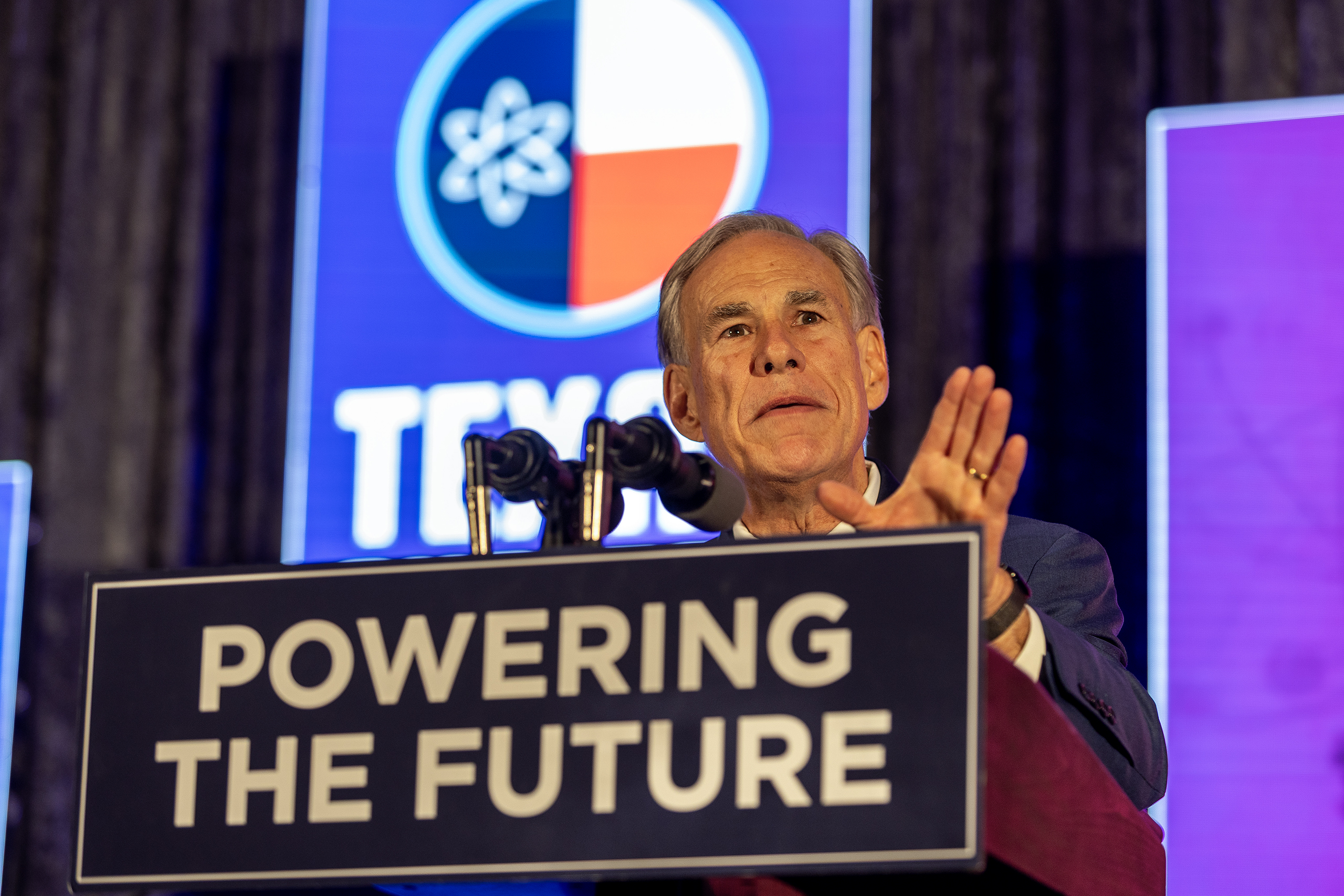
In Abilene, about 200 miles west of Dallas, Natura Resources is building the nation’s first advanced liquid-fuel research reactor in nearly 40 years. The project is housed at Abilene Christian University, where a $25 million research facility was completed in September 2023.
Natura has raised $120 million in private funding and received another $120 million from the Legislature.
Natura’s technology uses molten salt as both fuel and coolant — a design last tested at Oak Ridge National Laboratory in the 1960s. The company is first building a 1-megawatt research reactor in Abilene, intended to demonstrate to regulators and investors that the technology works and is safe.
…
Aalo Atomics is taking a different approach. The startup, founded by Canadian-born engineer Matt Loszak and based in Austin, is designing a sodium-cooled fast reactor, a technology that uses solid fuel, like conventional nuclear plants, built specifically for factory mass production.
Each unit would produce 10 megawatts, enough to power roughly 6,000 to 7,000 homes in Texas, and the reactors will be sized to fit on a standard truck. Aalo’s commercial model would consist of five of these units, totaling 50 megawatts.
Loszak said the company plans to activate its first 10 megawatt test reactor within about five months, after completing prototype testing at the end of December, as part of its effort to move toward commercial deployment.
Lol, typical American centric article.
Just outside Toronto, they’re building four 300MW small modular reactors, at an existing nuclear plant, using proven designs from Hitachi, and the first one is targeted to come online by 2029 or 2030, eclipsing the Texas projects in scale, timeline, and practicality, but that literally doesn’t even get a passing mention.
300mw are indeed a much different scale from 10mw.
I wonder if your ire is misplaced… As these are sort of different things. The 10mw reactors have different use cases, they’re not really designed to be installed as part of a power plant, but more for individual on-site uses, like as a reserve power system for a hospital, or as power for a remote mining location, disconnected from the grid.
My point is just, it might make sense to not mention the larger reactors here, as they’re not really the same.
So how long until it’s small enough to power a Pip-boy?
I’m sure Texas will do it in the dumbest most unregulated way possible. It will be a good example of what not to do.
4 years to build a power plant is still fucking stupid when you could install 10x the solar and battery capacity in that time.
Yeah, these guys really have their heads up their asses on this.
budgeted at 17.5c/watt (CAD), that too is a boondoggle before additional Ontario taxpayer corruption.
They’re not in the same game.
This should be interesting. Texas can’t even keep its own electric grid functioning all year round.
And who will handle the waste product? And who will pay for handling the waste product?
That’s such a small, manageable concern compared to the damage that is done by fossil fuels.
It is, unless it’s distributed in a plume because Texas environmental regulators suck.
That’s what the NRC is for.
And they have enough people to maintain and inspect the hundreds of thousands of reactors that are going to be built, if those small reactors work?
not hundreds of thousands. they are too expensive to be that common.
Well they don’t do any maintenance. And considering the plant only gets built if the NRC says so, I think they’ll manage. NRC doesn’t fuck around. It’s also not a good look to Trump’s base to deregulate nuclear safety; they’re historically the ones more worried about that.
The US has the most amount of data centers at ~5500. Not even anywhere close to hundreds of thousands.
Nonsense. We can just let the Free Market handle it
Haha that’s a good joke.
Natura’s research reactor is designed to first prove the LFMSR concept at megawatt scale, then be converted to prove that MSR reactors can reprocess existing nuclear waste as a percentage of its fuel. Which means we could take all of the current stockpile of nuclear waste and re-burn it to the point that it’s 90% consumed (instead of 5% consumed today) and leave a waste product that decays to safe levels extremely quickly (tens of years).
I’ll believe it when I see it. This is the state that fracked everything and then spread its radioactive, pfas-infested fracking waste all over the land. Now they’re building elementary schools on top of it.
It appears, Texans.
Based on the history of zoning and industrial accidents in Texas these will go next to residential areas.
How long until they’re driving around with leaking mini reactors in their lifted trucks with their don’t tread on me and blue lives matter stickers?

Is it easier to secure, monitor fewer, bigger reactors or thousands of* small ones? Accidents are still going to happen and I know which scenario makes more sense to me. Especially in light of Trump’s recent push to deregulate nuclear energy, kill the EPA, and pretty much any other kind of sensible management efforts of technology that is great until something goes wrong then it quickly becomes a multi-generational clusterfuck.
Solar, batteries and long-range transmission infrastructure just makes too much sense I guess.
Is it easier to secure, monitor fewer, bigger reactors or thousands of* small ones?
A moot point when we don’t build new ones anymore.
But the big appeal of the molten salt reactor is that it doesn’t require continuous manual interventions.
Solar, batteries and long-range transmission infrastructure just makes too sense I guess.
Sure. Obviously.
But that’s WOKE, so we hate it.
Nuclear definitely has a role to play. Integrating SMRs into our global shipping fleet would eliminate the enormous waste and emissions of bunker fuel, for instance.
And areas that don’t have reliable sunlight or wind (far north/south regions) or that require high steady output in confined areas (large factories, urban centers, major metro arteries, etc) can see real benefits, relative to gas or coal power.
It’s a technology we should have invested more heavily in 60 years ago. Obviously, Texas will fuck it up. But that’s not an indictment of the technology, just the capitalist dipshits that run the state.
Nice, we’re going backwards…
texas gon blow itself the shit up
Are you serious?
do i look serious?
Like, backyard? Sure would come in handy after hurricanes.
Can’t wait for a hurricane to smash up 5 small truck sized reactors and spread the debris around.
Sounds more like a tornado than a hurricane.
But also, you can fortify these underground and behind concrete in a way you wouldn’t for a Galveston Beach house.
Their electrical companies don’t exactly have the best record for maintenance and repairs…
$120/watt is orders of magnitude worse than Vogtle’s $15+/watt. Salt designs of the 1960s were abandoned due to corrosion issues.
Aalo is pure BS for promising eventual 3c/kwh which would require 50c/watt installation costs. Again, salt (sodium coolant) based that requires material science (always expensive) to limit corrosion. SMRs are a new scam needed because old nuclear scam has worn out.
SMRs are a new scam needed because old nuclear scam has worn out.
Idk about that. Consider the Linglong One (ACP100): Developed by the China National Nuclear Corporation (CNNC), it is the first SMR to pass an independent safety assessment by the International Atomic Energy Agency (IAEA) in 2016. Construction began in 2021, and the core module was installed in 2023.
Definitely a challenge of materials sciences, but to call it a scam? Come on. Coal sticking around as long as it has is the scam.
Linglong One (ACP100) generates up to 1twh/year. $23/mwh in operational costs. At $5.5/watt ($700m) it is very reasonable for nuclear. But all of this is China. 1/3rd materials/construction costs, 1/2 financing costs. Anti-corruption by design, local and national government support supervises/ensures results. In west, we just have politically bribed oligarchist subsidy programs.
When do the death claws show up?
Can we change the last word? /s of course. of course.
Uh, nice, but a similar project is taking place in Ontario, starting up in 2028. 4 SMRs.