

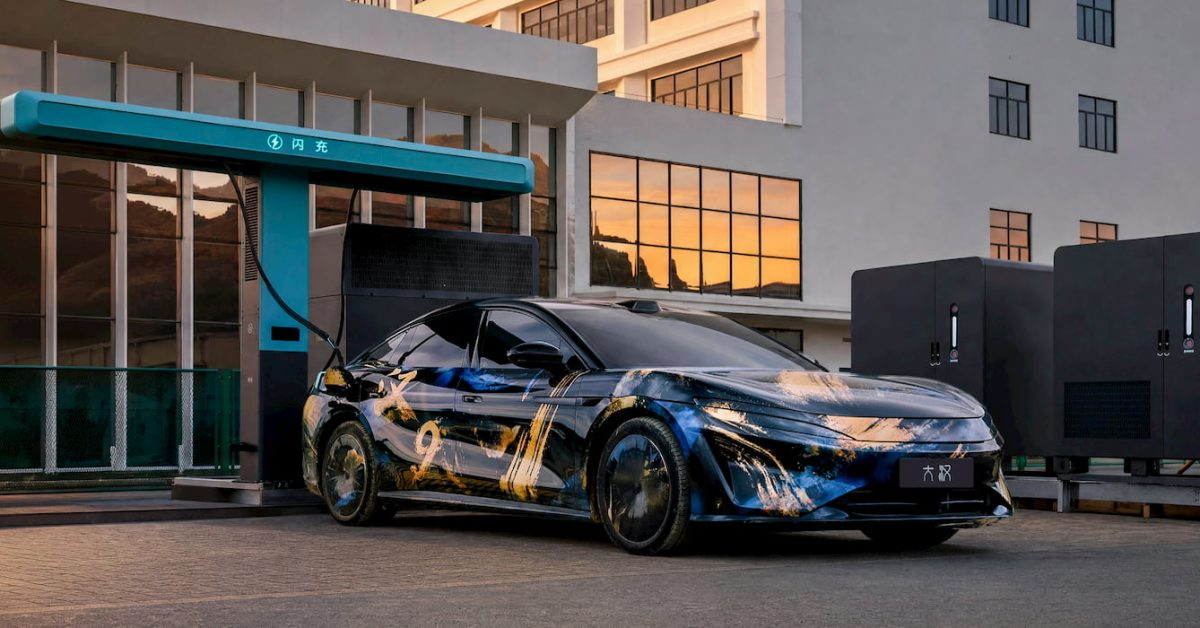
I own a BYD
It’s hilarious to see those who rant and rave in opposition to EVs starting to grow silent
An EV is just so goddam smooth and silent to drive compared to an ICE. I feel like I’m driving an absolute luxury car, compared to my old ICE car, that was with leather cabin, and had a 2.2 liter engine. A higher mid range car here.
But the EV is just a so much better experience to drive. We’ve had it for almost a year now, and I still enjoy that sense of luxury, and also something that is harder to describe, but it’s like it drives with confidence, in a way I’ve never experienced with an ICE car. I guess it has to do with all the power being available in an instant, no matter what speed you drive.I know now why people say, when you have had an electric, you will never go back.
it’s like it drives with confidence
I think it’s because it reacts to the controls soo much faster.
In an ICE vehicle, especially with sticks shift, you’re pushing and pulling all these gears and levers and pedals to control a transmission connected to an engine, or a brake, which will then attempt to produce the revolutions that you requested.
In an EV, it just does it. It’s like the pedal is a direct control of the engine, which is connected directly to the wheels, which always has enough torque to carry out your request, even braking. Technically it still has a transmission etc., but it doesn’t cause a delay like conventional transmissions.
In everyday driving, this shows most clearly when you’re starting from a complete stop. You can find soo many more openings in traffic, when you trust you car to accelerate efficiently to merge into the traffic fluidly without getting in the way or getting into any risk when doing it.
I’ve been driving an ICE car lately for unrelated reasons, and it’s definitely not a backstep you’ll want to take. It feels like controlling a steam driven submarine using only pressure valves to steer through a mine field.
The pedal does not directly control the motor, it inputs a TPS to prevent burnouts. Transmissions don’t cause a delay, the progressive torque curve of ICE makes multi speed transmissions necessary. The instant power of EVs is one reason Tesla owners have the highest crash rates.
You can find soo many more openings in traffic,
Please, please, please don’t do that. Cars are dangerous things and when traffic is so close that you’re looking for openings, it is too congested to get in there. Safety should be your first priority and that means you’re looking for openings that even a car with a tiny little one liter engine it has more than enough space to get in. If there isn’t a big gap, just sit back and wait for one, It’s a sign that your city needs more roads. Not a little more roads like the people say one more lane, a lot more lanes. Generally by the time people are asking for one more lane, they need five times as many lanes. Yes, that’s expensive, maybe you should look into public transit instead.
Great safely folks. I’ve lost enough friends to drivers who were in a hurry. Please don’t add another one to that list.
More lanes doesn’t solve anything. It only increases traffic by induced demand.
What really helps to accommodate increasing traffic is to lower the speed limit, so more cars can fit in the same lane.
If you get induced demand that means your city is way behind in getting people where they want to be. If people didn’t want to go places they would live in remote locations. Instead they live in cities because of the options.
Once again, maybe you should build better transit. Don’t use induced demand as an excuse to not let people get places.
this shows most clearly when you’re starting from a complete stop.
Yes, I have this exact feeling the most when I’m stopped completely at a bigger road I drive into. It’s just so damned easy and smooth compared to an ICE car.
It’s the acceleration for me. It’s like having a sports car the size of a truck.
The ID.4 isn’t amazing in acceleration it’s only 204 hp. But that’s still enough to make it faster than our old Ice car that was 160 hp.
In European terms that makes it go 0-100 km/t in 8,5 sec. That’s less than half a second faster than the old ICE car.
BUT, the acceleration is always instantly ready, and it’s so quit I barely hear it inside the car.
We could have had a car that goes from 0-100 in less than 5 seconds for the same price, but we chose not to, for 2 reasons, number one I’ve seen neighbors have stupid things happen because they accelerated too quickly, like a small garden trailer turning over for going too fast through a roundabout. And quite frankly, I know myself well enough to know that I would have a very hard time not to give it a bit of pedal occasionally. The 2nd is that insurance on those faster cars is twice the insurance of our more moderate car.But despite that, I agree that the acceleration is cool, because it’s always ready, it’s plenty fast IMO, and it quiet.
AND I also noticed that a bit of acceleration doesn’t kill the economy nearly as much as it does in an ICE car. The efficiency when accelerating is way better.
Yeah, in the US the attitude has been changing dramatically fast recently. The combination of the Iran war fucking gas prices and the 2025/2026 model year bringing sub-four-second 0-100km to less than $50,000 has really convinced even some of the hardliners (and it helps that car manufacturers finally realized EVs don’t have to look like dumpy sedans any more, LOOKING AT YOU TOYOTA). And Rivian proving EVs can offroad has really launched an entirely new market, which has been great fun.
Yanks don’t know what high fuel prices are
They just have shitty, inefficient vehicles, because they make cars and motorbikes that are a metaphor for their country
Overweight and slow.
Yep!
Lazy, all about making things bigger rather than better, the thought of something resembling agility is truly terrifying
And obnoxious. Being obnoxious is a feature
I had a neighbour ask if my motorbike was electric, because they never hear me being an obnoxious cunt
It’s a 2008 bike, but my penis size isn’t correlated with how much noise I can make
and it helps that car manufacturers finally realized EVs don’t have to look like dumpy sedans any more
Yea now we get to choose between hatchback on stilts that doesn’t have all-wheel drive, hatchback on stilts that gets AWD as an expensive option but still won’t be any good off road, as well as wagons on stilts. Ooh and also sedans on stilts.
Fuck this crossover craze, give me back sedans and wagons. An SUV should have actual ground clearance and be able to reliably drive more than one wheel in slippery conditions, not when a computer demands it. If it doesn’t that, it’s just a hatchback or wagon on stilts.
I’m sorry, I can’t hear your reasonable desires and lamentations for the state of the industry, I’m too busy doing a 3.5s 0-100km in The Absolute Most Confusing EV Ever Produced

I mean admittedly I absolutely want one (lmao not for $115k) but only for the sheer perversity of it (it is objectively worse than any other option. On several metrics it even manages to suck worse than the cybertruck). And since I’m not exactly a member of a large demographic, certainly not large enough to support an entire product line like this, I’m damned curious just what the fuck market segment they think they’re targeting with this one.
I’d take that over a “Crossover SUV” any day of the week. It’s stupid, but it’s more of an SUV than a VW ID.4 or a BYD ATTO 2, the latter being available ONLY in FWD. Like if those crossovers are what someone wants, they can get by with a normal height car too. If they have back issues or want to go off road, the crossovers aren’t tall enough anyway and I suspect most will fare worse than my wagon off road.
I’m damned curious just what the fuck market segment they think they’re targeting with this one.
People who have nostalgia because they wanted a Hummer H2 back in the day but were either kids, or too poor because they were just getting into the workforce, I’m assuming. If you care more about the size and the shape than the thirsty V8, this is a better deal I guess
In defense of a crossover:
they can get by with a normal height car too.
The prevelance of tall EVs is down to a couple factors: how dangerous impacts to the battery pack are with Li or Co chemistry EVs, and the increased suspension requirements because of how damn heavy they, and the aim to keep from bottoming out your suspension. Along with the lessened concern about fuel efficiency, making a vehicle into a crossover by extending the suspension instead of having a sedan or classic hatchback just makes sense.
Admittedly though I have a crossover EV that I got specifically for the increased ride height (surprisingly hard to find, really). The additional clearance when driving thru a field or down a driveway (or on a rally course, the real reason I got it…) brings peace of mind. I also have very niche issues: my partner is over 6’ and simply does not fit in things like the EV6 or a Prius. I wear 6"+ platform boots frequently so the extra clearance is nice. etc. Mine is about as capable of offroad as my subie was, so “no issue driving across a pasture or down logging roads” but nothing more than that, and that’s fine for my purposes.
It also sits in a pleasant niche where I can fit a 2x4 in it with the trunk closed (and the end on the dash lol), but it still fits in a compact parking space, and there’s enough passenger space to fit five drunk furries and their cannon in the back, on those evenings where that’s relevant.
But admittedly my use-case is not all that common, and the market is slightly oversaturated with significantly less useful crossovers (RAV4, IX, fucking Mach-E).
But EVs are going to crash the power grid. Can you imagine if every house got up at the same time everyday and made toast?! Chernobyl!!!
Data centres ok though.
China is really pushing the limits with fast charging compared to the rest of the world. I have an VW ID.4 that can do about 135 kW charging.
10-80% in 25 minutes.
These new Chinese cars have peaks that are 10 times higher, and that is insanely impressive, even if the average is “only” 5 times higher.
But peak isn’t everything, the ID.4 actually charges faster 10-80% than a Tesla model Y with 250 Kw peak charge rate. Because the Tesla has an awful charge curve, that declines steeply resulting in a low average charge rate.Here the most powerful chargers are 400 kW, which are plentiful so you can easily find them if you have a car that can utilize that.
One thing that is nice when charging compared to filling up gas, is that you just connect the plug, and than you can go to your car, and sit comfortably while the car is charging, or you can go have a snack or something. You are not tied to standing idly with the hose. So the extra time it takes to charge is not as much as a problem as I thought it would be when we bought an EV.One thing that is nice when charging compared to filling up gas, is that you just connect the plug, and than you can go to your car, and sit comfortably while the car is charging, or you can go have a snack or something. You are not tied to standing idly with the hose. So the extra time it takes to charge is not as much as a problem as I thought it would be when we bought an EV.
This is the thing so many ICE drivers get hung up on. They always talk about how quickly they can fill up and leave. But they ignore that you don’t need to even go to a public charger like that most of the time if you charge at home. If you can’t charge at home that’s a different issue.
I only need to think of charging when traveling, and even then the car will automatically fill in charging stops asking the route at optimal points for the fastest charging. For healthy driving habits you should be getting out of the car regularly both for a mental break and to get up and get blood moving. Stopping to charge while you use the restroom and grab some food often takes more time than people think. I’ve come back to the car and only had to wait like 5 minutes most of the time, sometimes it’s even already got enough charge when I get back.
But they ignore that you don’t need to even go to a public charger like that most of the time if you charge at home.
Absolutely, in the 10 months we’ve had the car we’ve literally only charged away from home less than 10 times. Because almost all of our trips can be done on 1 charge.
And charging at home is both super convenient and super cheap.Even if you can’t charge at home, you could charge it when you are buying all these sofas and fridges people keep telling me I need to buy a car or SUV to transport.
Every time someone mentions something like that, I just ask them if they use their truck to haul something more than once a month. You can rent a pickup truck from Uhaul for a day for $20. Some Home Depot and Lowe’s locations also offer truck rentals. Unless you’re using that truck to haul something at least weekly, it doesn’t really make sense to drive that gas guzzler all the time compared to basically anything else.
We need utes to come back as small electric vehicles. The slate truck is a move in the right direction, but I also want a lower profile version like an el camino layout which could get better mileage at speed with a very low and accessible bed. Heck, something slightly larger than a BRAT would be neat for doing the small scale stuff where washing out a bed is preferable to having stinky stuff in a hatchback.
You are not tied to standing idly with the hose.
That… applies for fuel too? If it’s not super busy, I’ll go inside and grab a snack while getting fuel. A minute later when I’m out, the tank is full.
But personally I’m not too sure about these 1500 kW charging EV batteries. That’s got to cause more problems than it solves. 1.5 megawatts is just under 1/1000 of the peak power consumption ever for my country of ~1.3 million people (1.7 gigawatts this winter during a bad cold streak). If just 1000 people across the country decide to charge their cars at that rate at the same time, they’ll double the national grid’s load for a moment. Going to be a ton of fun.
Less powerful EVs aren’t anywhere near as bad because at 500 kW you need 3x more people for the same load and that’s probably way more than 3x less likely to happen.
Plus going from 10 minutes of charging time to 4 isn’t anywhere near as impressive as 25 to 10. 10 minutes is a piss break and hot food from the service station, it takes no effort to fill 10 minutes of time.
This is dangerously negligent behavior. Don’t do that. Also it’s a crime.
That… applies for fuel too? If it’s not super busy, I’ll go inside and grab a snack while getting fuel.
That’s illegal here, the hose is not allowed to be able to lock.
That’s got to cause more problems than it solves.
Just because you don’t see how it can work, doesn’t mean it doesn’t. ( argument from ignorance ) First of all the grid of Estonia isn’t isolated, it is connected to a much larger European grid of about 700 million people.
I know this is pretty recent, before it was connected to Russia. But these connections are strategic and are constantly expanded throughout Europe.These 1.5 MW chargers are generally connected in groups, if the grid isn’t powerful enough to handle them, they will not be established.
But my guess is they use batteries to store power for fast discharge, that are charged a steady but lower rate.
Remember when a car charges at that rate it only draws power for 5 minutes. So one charger can handle maybe 12 cars per hour.Here in Denmark we have Charging stations where multiple brands are represented, with each their “island” of chargers. And I’ve seen some that have more than 20 stations with 400 kW charging available. The reason they aren’t bigger, is that there isn’t a market for it yet. But if they are run all of them simultaneously that would be 8 MW.
But if 2 on the same station are used at the same time they only provide half the power. So the max is really only 4 MW.
This is in Denmark where we are about 6 million people, and our peak AFAIK is only 5,3 GW, But the country is split into 2 energy zones, East and West, so for one zone the number is probably closer to 2,7 GW. Mostly half the country is on 1 island, and the rest is mostly a peninsula and an island.
So closer to 3 million, and for some reason with way lower peak power per capita than Estonia. But the electric grid is connected to Norway, Sweden, Germany, and even UK and Poland.IDK how they do it, but it works, and I’ve never experienced a problem.
1500 kW.
Does anyone in media know how to use the metric system?
I drive 10 million millimeters to work.
in this case, it’s probably a deliberate choice, because chargers in the wild are generally commonly rated anywhere from 11-350 kW, keeping it in kW gives drivers who are used to seeing ‘## kW’ an easier time comparing without having to do mental math.
Well I just walked 12 billion nanometres to the toilet.
5 months?! I can charge my car up to 80% in like 15 minutes.
Am I mathing with wrong or is that 15GWs? Sounds insane.
Close
1000 kilowatts is a megawatt. 1000 megawatts is a gigawatt. Still an impressive amount of power to push
Give it a few years and getting your own personal wind turbine for fast charging your car at home would almost not be insane.
deleted by creator
BuT wHo WiLl PaY fOr It
That is over 100 times the amount my entire house can draw without blowing a fuse.
1.5 megawatts. Why?!
Because some people think 10-15min is too long to charge on a roadtrip.
If you’re sharing the driving, then maybe. If you’re on your own, then a ten minute break every couple of hours is sensible anyway, and so recharging isn’t inconvenient. Good maps and accurate range monitoring is more important than shaving off a couple of minutes. And having all the chargers be working, ofc - standard operating practice is to have a couple of them just be frozen up, to waste your time.
Main problem that we have (UK) is that most of the places that have fast chargers are in shopping estates on the outskirts of towns, and they largely serve pretty shitty coffee, and may or may not have toilets.
Even with a partner.
On my first electric roadtrip, I was surprised how much less taxing it was at the end of the day. When we had to stop every couple hours and were able walk for several min, the trip seemed less rushed and exausting.
It would be nice to get some more details on this. I doubt they managed to expand the grid this fast and plug in all those 1,500kW chargers to the grid (or did they?) so this most likely uses some battery-to-battery system. How many cars can this charge in a row? What’s the speed after the battery runs out? How hard/easy it is to actually charge a car this fast in real life?
There is a wikipedia article on this:
The standard ESS configuration includes two 185 kWh storage cabinets, providing a total buffer of 370 kWh per terminal. The ESS charges from the grid during off-peak hours and discharges rapidly during vehicle charging sessions. Depending on local infrastructure and vehicle traffic, the ESS is able to draw energy from the grid from roughly 100 kW and up to 560 kW when necessary.[8]
Your follow-up questions about charging speed are highly dependent on the connection to the grid.
Thanks for the additional info. BYD cars have about ~60kWh batteries so let’s say average charge is ~35kWh. So it has a buffer for ~11 charges. At 5 min per charge that’s an hour. Charging the buffer at 100Kw will take about 4 hours. That would be amazing where I live. Chargers are rarely used so pretty much everyone would charge at full speed. If people tried using this like a gas station, with one car charging after another, most people would have to charge at normal 100kW.
So it sounds like a reasonable design but is still quite far away from delivering gas station type level of speed. Which is kind of obvious. Most people will have to charge at home for EVs to be practical.
Most people will have to charge at home for EVs to be practical.
This isn’t particularly unreasonable though since the majority of people will only need a standard outlet in the vicinity of their car.
The problem is that a lot of people don’t have a fixed parking space where they could install a charger. No idea what % of people in Europe have garage/private parking space available. Where I live most new buildings have one but most older buildings don’t.
I don’t know about Europe but in the US, level 1 chargers don’t need to be “installed”, they can be plugged into a standard outlet. So you don’t necessarily need garage parking, the charger has a decent length cable of its own or (if you know what you are doing - there are safety warnings everywhere about this for good reason) an appropriately beefy extension cord can get out to your driveway. Most EVs can be configured to set off an alarm if the charger loses power or is disconnected while the car is locked.
For apartment buildings and that type of thing, it can be problematic yes, but there are solutions like metered outlets for assigned parking spaces that property management companies could be pushed to adopt. Although personally I think public transportation is more ideal than everyone having their own cars for dense multifamily housing like that, though the reality is still a ways off from that being viable in a lot of places.
I’m talking about Europe, yes. We don’t have as many suburbs here. In many places people fight for parking spots and providing limited public chargers will just mean people will fight over those too.
I think this might finally force cities to address all the issues with street parking. Owning a car is an individual benefit, so it’s ridiculous that the rest of society has to provide public areas for car owners to park their belonging. It made sense for accessibility 50 years ago, when only few people had cars, but not anymore. There simply isn’t room in the public space in cities for everyone to park their car.
It also seems that more and more parking lot these days are managed by parking companies, even a lot of those that used to be free. Car owners are gonna have to pay for using that space now. And since they’re paying for it, they should also expect to be able to charge there.
In Copenhagen, they’re currently talking about increasing the annual subscription by something like 500% to have a guaranteed parking in these places, because quite simply, the area could be used for other things that reflect the price of the city square meters much better than just storing inactive vehicles.
Tl;dr: Don’t buy a car if you don’t have a place to put it. Once you figure out where to put it, place your charger there. If you can’t place your car anywhere in a dense city, perhaps public transport is a better option to begin with.
At least where I live, level 2 street chargers are so ubiquitous that charging is an afterthought. Most people here don’t have any way to charge at home, but its so easy to charge on the street that it doesn’t matter.
EVs adoption is an infrastructure problem, not a technology one.
Where is that? How does that work? It takes a lot of time to charge a car. Do people move their cars when they finish charging or there’s literally some many chargers that you can park anywhere and charge?
Can’t speak for the other person, but I park in a public parking area with a bunch of chargers. I usually plug my car into the slow charger once per week after work. It’s usually done charging at some point in the night, that there’s no reason to move the car. All of the chargers are never in use at once anyway. Then I just unplug it in the morning. I spend less time charging, than I used to pump gas.