It would be nice to get some more details on this. I doubt they managed to expand the grid this fast and plug in all those 1,500kW chargers to the grid (or did they?) so this most likely uses some battery-to-battery system. How many cars can this charge in a row? What’s the speed after the battery runs out? How hard/easy it is to actually charge a car this fast in real life?
The standard ESS configuration includes two 185 kWh storage cabinets, providing a total buffer of 370 kWh per terminal. The ESS charges from the grid during off-peak hours and discharges rapidly during vehicle charging sessions. Depending on local infrastructure and vehicle traffic, the ESS is able to draw energy from the grid from roughly 100 kW and up to 560 kW when necessary.[8]
Your follow-up questions about charging speed are highly dependent on the connection to the grid.
Thanks for the additional info. BYD cars have about ~60kWh batteries so let’s say average charge is ~35kWh. So it has a buffer for ~11 charges. At 5 min per charge that’s an hour. Charging the buffer at 100Kw will take about 4 hours. That would be amazing where I live. Chargers are rarely used so pretty much everyone would charge at full speed. If people tried using this like a gas station, with one car charging after another, most people would have to charge at normal 100kW.
So it sounds like a reasonable design but is still quite far away from delivering gas station type level of speed. Which is kind of obvious. Most people will have to charge at home for EVs to be practical.
The problem is that a lot of people don’t have a fixed parking space where they could install a charger. No idea what % of people in Europe have garage/private parking space available. Where I live most new buildings have one but most older buildings don’t.
I don’t know about Europe but in the US, level 1 chargers don’t need to be “installed”, they can be plugged into a standard outlet. So you don’t necessarily need garage parking, the charger has a decent length cable of its own or (if you know what you are doing - there are safety warnings everywhere about this for good reason) an appropriately beefy extension cord can get out to your driveway. Most EVs can be configured to set off an alarm if the charger loses power or is disconnected while the car is locked.
For apartment buildings and that type of thing, it can be problematic yes, but there are solutions like metered outlets for assigned parking spaces that property management companies could be pushed to adopt. Although personally I think public transportation is more ideal than everyone having their own cars for dense multifamily housing like that, though the reality is still a ways off from that being viable in a lot of places.
I’m talking about Europe, yes. We don’t have as many suburbs here. In many places people fight for parking spots and providing limited public chargers will just mean people will fight over those too.
I think this might finally force cities to address all the issues with street parking. Owning a car is an individual benefit, so it’s ridiculous that the rest of society has to provide public areas for car owners to park their belonging. It made sense for accessibility 50 years ago, when only few people had cars, but not anymore. There simply isn’t room in the public space in cities for everyone to park their car.
It also seems that more and more parking lot these days are managed by parking companies, even a lot of those that used to be free. Car owners are gonna have to pay for using that space now. And since they’re paying for it, they should also expect to be able to charge there.
In Copenhagen, they’re currently talking about increasing the annual subscription by something like 500% to have a guaranteed parking in these places, because quite simply, the area could be used for other things that reflect the price of the city square meters much better than just storing inactive vehicles.
Tl;dr: Don’t buy a car if you don’t have a place to put it. Once you figure out where to put it, place your charger there. If you can’t place your car anywhere in a dense city, perhaps public transport is a better option to begin with.
That’s a very reasonable point of view and the problem is that many places are not reasonable. Yes, many cities got their shit together and have proper public transport infrastructure. Cars are optional there and it’s easy to treat them as a luxury. At the same time many cities have terrible public transport and you can’t get to work/school/store without a car. Yes, the right solution is to offer good public transport but most places will just shift the problem to the public. “You can’t charge your car? Fuck you, not my problem”. Mostly poor people will be affected by this, social exclusion will get worse.
At least where I live, level 2 street chargers are so ubiquitous that charging is an afterthought. Most people here don’t have any way to charge at home, but its so easy to charge on the street that it doesn’t matter.
EVs adoption is an infrastructure problem, not a technology one.
Where is that? How does that work? It takes a lot of time to charge a car. Do people move their cars when they finish charging or there’s literally some many chargers that you can park anywhere and charge?
Can’t speak for the other person, but I park in a public parking area with a bunch of chargers. I usually plug my car into the slow charger once per week after work. It’s usually done charging at some point in the night, that there’s no reason to move the car. All of the chargers are never in use at once anyway. Then I just unplug it in the morning. I spend less time charging, than I used to pump gas.
Yes, that will work as long as there at least one charger for every 7 cars (probably a bit more because people will not charge on a perfect schedule) and people act responsibly. Where I live it’s not even close to that but it could be achievable.


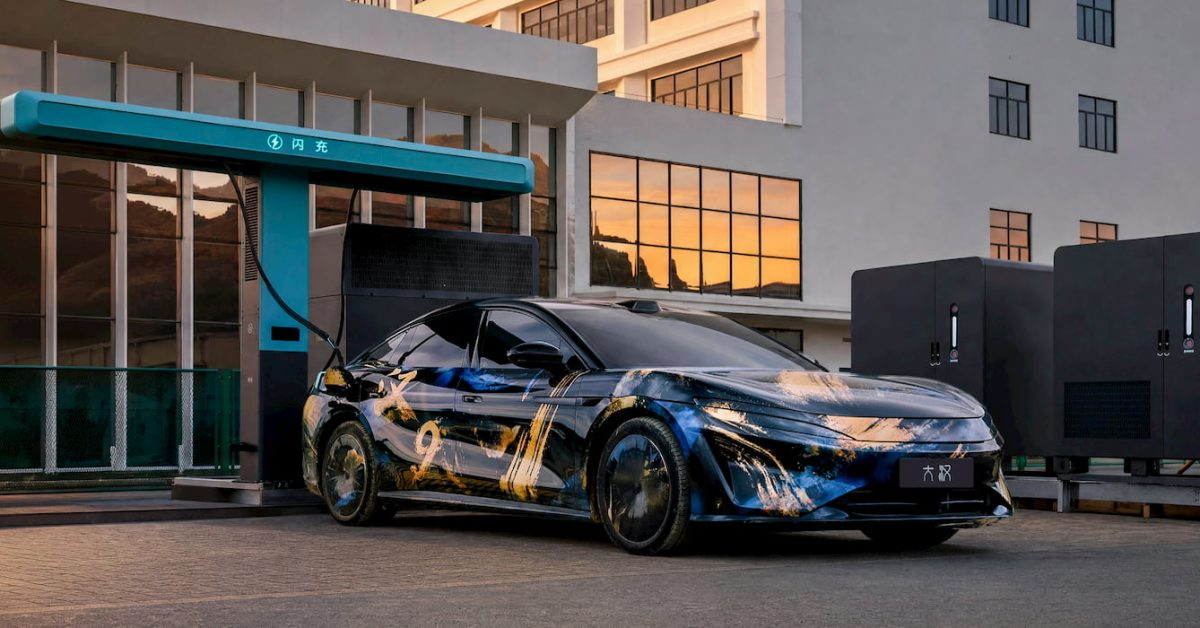
It would be nice to get some more details on this. I doubt they managed to expand the grid this fast and plug in all those 1,500kW chargers to the grid (or did they?) so this most likely uses some battery-to-battery system. How many cars can this charge in a row? What’s the speed after the battery runs out? How hard/easy it is to actually charge a car this fast in real life?
There is a wikipedia article on this:
Your follow-up questions about charging speed are highly dependent on the connection to the grid.
Thanks for the additional info. BYD cars have about ~60kWh batteries so let’s say average charge is ~35kWh. So it has a buffer for ~11 charges. At 5 min per charge that’s an hour. Charging the buffer at 100Kw will take about 4 hours. That would be amazing where I live. Chargers are rarely used so pretty much everyone would charge at full speed. If people tried using this like a gas station, with one car charging after another, most people would have to charge at normal 100kW.
So it sounds like a reasonable design but is still quite far away from delivering gas station type level of speed. Which is kind of obvious. Most people will have to charge at home for EVs to be practical.
This isn’t particularly unreasonable though since the majority of people will only need a standard outlet in the vicinity of their car.
The problem is that a lot of people don’t have a fixed parking space where they could install a charger. No idea what % of people in Europe have garage/private parking space available. Where I live most new buildings have one but most older buildings don’t.
I don’t know about Europe but in the US, level 1 chargers don’t need to be “installed”, they can be plugged into a standard outlet. So you don’t necessarily need garage parking, the charger has a decent length cable of its own or (if you know what you are doing - there are safety warnings everywhere about this for good reason) an appropriately beefy extension cord can get out to your driveway. Most EVs can be configured to set off an alarm if the charger loses power or is disconnected while the car is locked.
For apartment buildings and that type of thing, it can be problematic yes, but there are solutions like metered outlets for assigned parking spaces that property management companies could be pushed to adopt. Although personally I think public transportation is more ideal than everyone having their own cars for dense multifamily housing like that, though the reality is still a ways off from that being viable in a lot of places.
I’m talking about Europe, yes. We don’t have as many suburbs here. In many places people fight for parking spots and providing limited public chargers will just mean people will fight over those too.
I think this might finally force cities to address all the issues with street parking. Owning a car is an individual benefit, so it’s ridiculous that the rest of society has to provide public areas for car owners to park their belonging. It made sense for accessibility 50 years ago, when only few people had cars, but not anymore. There simply isn’t room in the public space in cities for everyone to park their car.
It also seems that more and more parking lot these days are managed by parking companies, even a lot of those that used to be free. Car owners are gonna have to pay for using that space now. And since they’re paying for it, they should also expect to be able to charge there.
In Copenhagen, they’re currently talking about increasing the annual subscription by something like 500% to have a guaranteed parking in these places, because quite simply, the area could be used for other things that reflect the price of the city square meters much better than just storing inactive vehicles.
Tl;dr: Don’t buy a car if you don’t have a place to put it. Once you figure out where to put it, place your charger there. If you can’t place your car anywhere in a dense city, perhaps public transport is a better option to begin with.
That’s a very reasonable point of view and the problem is that many places are not reasonable. Yes, many cities got their shit together and have proper public transport infrastructure. Cars are optional there and it’s easy to treat them as a luxury. At the same time many cities have terrible public transport and you can’t get to work/school/store without a car. Yes, the right solution is to offer good public transport but most places will just shift the problem to the public. “You can’t charge your car? Fuck you, not my problem”. Mostly poor people will be affected by this, social exclusion will get worse.
At least where I live, level 2 street chargers are so ubiquitous that charging is an afterthought. Most people here don’t have any way to charge at home, but its so easy to charge on the street that it doesn’t matter.
EVs adoption is an infrastructure problem, not a technology one.
Where is that? How does that work? It takes a lot of time to charge a car. Do people move their cars when they finish charging or there’s literally some many chargers that you can park anywhere and charge?
Can’t speak for the other person, but I park in a public parking area with a bunch of chargers. I usually plug my car into the slow charger once per week after work. It’s usually done charging at some point in the night, that there’s no reason to move the car. All of the chargers are never in use at once anyway. Then I just unplug it in the morning. I spend less time charging, than I used to pump gas.
Yes, that will work as long as there at least one charger for every 7 cars (probably a bit more because people will not charge on a perfect schedule) and people act responsibly. Where I live it’s not even close to that but it could be achievable.