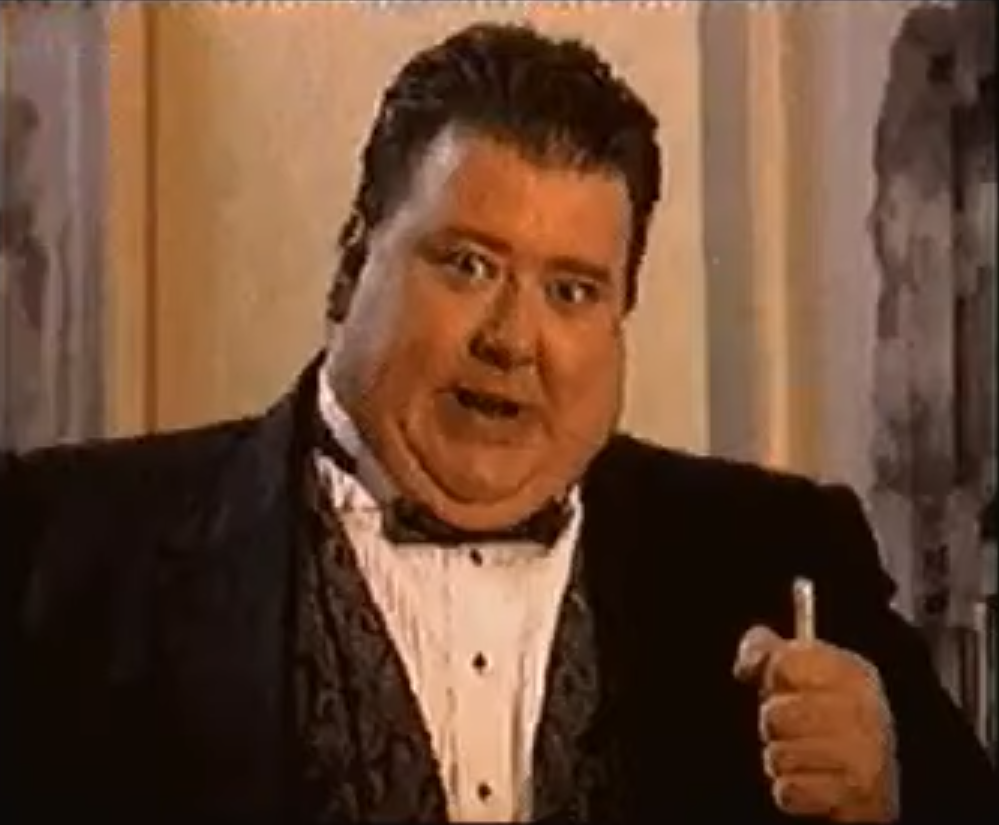
My brain feels Expandard
The exact sentence I came to post. Apparently we all think alike.
Thirded.
Thirdard*
Alikeard if you ask me.
Where’s the custard?

Shit piss fuck cunt cocksucker motherfucker tits fart turd and twat
There you go. I cust too much.
So a lizard must be an excess of Liz?
The opposite of Thin Lizzy.
And a leopard?
Oh no, people are gonna start being called “Rizzards” soon.
ahh so that’s why charizard is so hot
👏👏👏
So, calling someone a bast-ard, implies that their mother slept around on many beds that weren’t the marriage bed. Does that mean it all comes back to calling your mother a whore?

Ah yes, in English it apparently means ‘-ly’, in German it means ‘Arbeitsgemeinschaft der öffentlich-rechtlichen Rundfunkanstalten der Bundesrepublik Deutschland’… I guess some languages are just more expressive than others.
This is largely true. English takes ‘-ard’ from Old French. MW defines it as:
one that is characterized by performing some action, possessing some quality, or being associated with some thing especially conspicuously or excessively
The main point is that it’s generally just a pejorative suffix.
Citing the Trésor de la langue française informatisé, however, Wiktionary puts forward a surprisingly cogent counterargument and alternative etymology to the “packsaddle” one for “bastard”.
See also: haggard, laggard, braggart (this one changed to a ‘t’ for some reason), dastard, dullard, and a few others. It’s uncommon but it’s out there!
My utterly baseless theory on braggart is that those folks have always been so MF irritating, through history, that people pronouncing the word just tend to do so using a clipped, terse voice.
“Oh, m’lady, pray tell? T’was Kevin spinning such fanciful yarns for thee? (grits teeth) UGH, that braggart”
I don’t care if it’s true.
The -ard is basically “fucking” + nominaliser (if necessary):
- wizard - fucking wise one
- drunkard - fucking drunk one
- coward - fucking tail (the initial part is from Old French “coue” tail, itself from Latin “cauda” tail. Who shows the back in a fight? Someone running away!)
The “nominaliser” part is an artefact of the borrowing, the suffix is from French. Romance languages often use adjectives as if they were nouns, but that doesn’t quite roll in English. In turn French borrowed it from Frankish, it’s apparently cognate of English “hard”.
The etymology of “mustard” is disputed. The first part is likely from Latin “mustum” must; it used to be prepared with young wine. The -ard is typically explained as ardens (fiery, hot). So basically “mustum ardens” hot must. …Capsicum peppers are from the Americas, black pepper and long pepper were expensive, European mediaevalards didn’t really have a lot of spicy flavours to work with, so… I guess mustard was spicy for them?
I’m going to turn “wizard” back into an insult. Some smart-aleck tries to act bougie: “fuck off, wizard”
Interestingly now a “queutard” in french slang is someone who uses his queue (=tail, slang for dick) a lot, or wants to at least.
Fucktards be making fuck all the way to the parking lot.
I’m not sure but I think the suffix in this case would yield “fuckard”. With “fucktard” being interpreted as “fuck [re]tard”. And given “retard” is nowadays interpreted as a slur, I’d discourage it.
Oh man… I can’t believe I missed that origin. Yeah… You’re absolutely right about that.
Today I learned I might be too ret.
The root means “slow”, BTW, so it does get to join that list.
What about standard
I think there’s a wacky Japanese comic book about this
I’d say its more bizarre than wacky.
Don’t be too adventurous now
According to etymonline, it’s from the French estandart meaning a military banner, or from the Medieval Latin standardum. These in turn possibly come from the old Frankish standhard, so literally to stand hard like a flag or a long-standing tradition.
They bring up wizard… But what about bards?
They are just Too much… Ask every DnD Master.
I love learning new stuff through memes.
So when people call me a retard they’re saying I’m overly moist?
That you have an excess of Ret, not Wet.
C’mon, retard, figure it out.
Retard means literally “delayed”, ultimately from latin tardus (also see “tardy”), meaning slow. Doesn’t seem like it comes from the same suffix.
I’m just shitposting, don’t mind me.
Un animal de bât is indeed a pack saddle animal, and bâtard is indeed a bastard so that’s pretty cool. Never realised the connection! -ard in French is also often a negative suffix, like connard which would be a… “cuntard” if you will.
-asse is the feminine variant, although there are inconsistencies, such as pétard / pétasse which are probably related but one is a firecracker, while the other is a tart (the lady kind)Rude language is always so much fun!