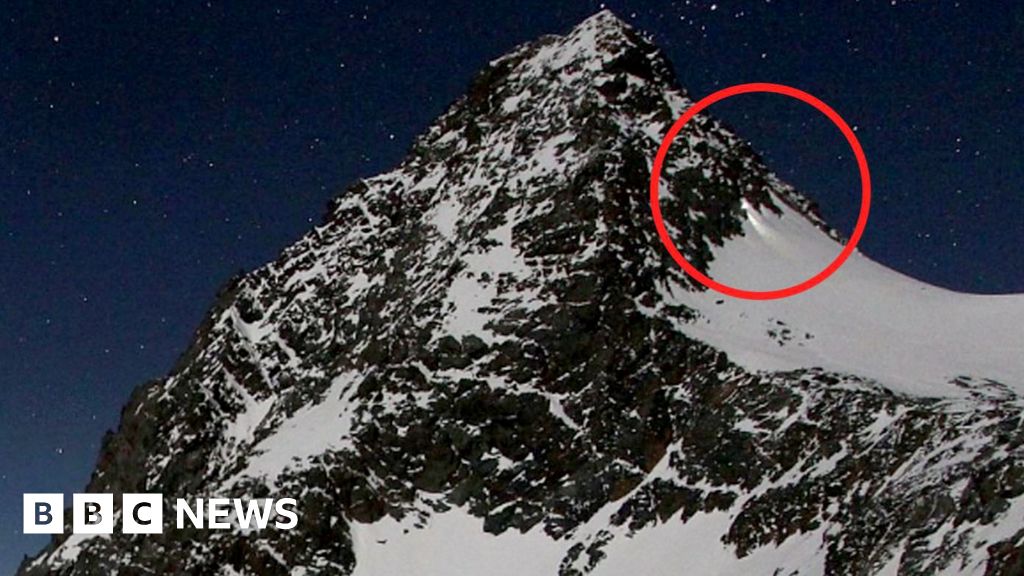
More than a year after a 33-year-old woman froze to death on Austria’s highest mountain, her boyfriend goes on trial on Thursday accused of gross negligent manslaughter.
Kerstin G died of hypothermia on a mountain climbing trip to the Grossglockner that went horribly wrong. Her boyfriend is accused of leaving her unprotected and exhausted close to the summit in stormy conditions in the early hours of 19 January 2025, while he went to get help.
The trial has sparked interest and debate, not just in Austria but in mountain climbing communities far beyond its borders.
Arctic mountains… unexplored deep caves… diving into oceanic trenches… I feel like if you do any of these things, you are solely responsible if you get hurt or die, and that people do these things because they are so dangerous.
Either she was an experienced climber and made the decision to enter a dangerous, life-threatening situation, or she wasn’t, and he dragged her into it. It seems like everyone is saying she’s the former except these prosecutors who are looking to paint her as a victim, when she had the skill and experience to make that decision, and chose poorly.
I think it really depends how dangerous it would have been for him to stay with her.
On Everest, if someone is incapacitated, then there’s no point waiting with them because then you’d die too and no rescue is coming.
This situation is different because a rescue could be mounted, and its not certain the guy would’ve died if he had have waited with her.
Like imagine you’re swimming a few hundred metres from the beach and your partner gets a cramp, do you just say “oh well you knew the risks” and leave them?
Like imagine you’re swimming a few hundred metres from the beach and your partner gets a cramp, do you just say “oh well you knew the risks” and leave them?
Only if you planned to breakup before, it avoid the uncomfortable situation for both person once you announced it and swim away 👍
If they can’t be helped without putting yourself at risk of drowning too, then yes. For instance, if someone is panicking and thrashing around, posing a threat to rescue, then they yes, you leave them to die or risk dying as well. This is an uncomfortable reality of being in dangerous situations.
Yeah one of the things you learn in lifeguard class is that it’s a wrestling match against the person you’re trying to rescue if they aren’t compliant (many aren’t and you can’t assume they will be).
LIFESAVING
The lifesaving portion at BUDS is a little bit of wrestling, a little bit of swimming, and a little bit of weight lifting.
It’s all procedural - it is pass or fail - it is not timed. You do not need to rush.
You start by jumping into the pool using a stride jump - or what I like to call a very slow step into the water. A stride jump is basically spreading your legs as far apart as possible like your taking one giant step. You are trying to create as much surface area as possible so your head doesn’t go under the water. Your arms do the same thing, out to your sides. You must maintain eye contact on your victim the entire time.
From there, you will swim head up freestyle to your victim, maintaining visual on your drowning victim.
For a compliant, non combative victim, you’ll simply grab them by the wrist and pull them into your tow. This is the wrestling portion of lifesaving and should be fast and aggressive. For an uncompliant, combative victim, you need to dive under the water, grab the victim by the hips and turn them so that their back is facing you. Now crawl up there back and get them into your tow. You must be aggressive.
Sure, but you’re taking me out of context.
The comment I replied to is basically saying that if it’s a risky endeavor then if things go wrong you just say “oh well you knew the risks” and leave.
As an aside, I’m Australian, I have a surf life-saving accreditation (very common here), I’m well aware of the dangers of a water rescue.
My point is, it’s not a question of whether the person in need of rescue knew the risks, rather a question of the risks to the rescuer. As I said in my comment it’s not clear what the risks to the guy really were. It does seem that, had the couple been appropriately provisioned, the risks to him would’ve been minimal.
Like imagine you’re swimming a few hundred metres from the beach and your partner gets a cramp, do you just say “oh well you knew the risks” and leave them?
A friend told me his lifeguard course contained a self defense portion, to avoid being dragged underwater by someone panicking. I can’t say the same about my mountaineering experience.
What is weird is the phone in silent and him not trying to contact for help. Mobile coverage maps shows that this area is under coverage. From a personal experience, when It’s really cold I usually put on every piece of clothes I can once I stop moving. Even get in my sleeping bag if necessary.
Yes. What was the point of him putting his phone on silent? What was the reasoning behind that?
Probably made the murder easier.
Trying to save battery? Mobile works poorly in mountains.
Airplane mode would save battery. Silent vs loud ringing isn’t a significant battery drain.
Silencing a phone does not save battery.
I’d be curious to hear the other side of the story. The phone on silence is what “police allege”, and mobile coverage maps are often exaggerated for marketing, not to mention being in a big storm could affect service.
It’s possible his phone was not working, and he kept going until he got service.
Look, I don’t live in Austria, I live in Switzerland, but I’m pretty sure it’s similar in our neighbour. The coverage might be true, there aren’t actually a lot of places without basic coverage, keep in mind we are both much smaller counties than the US for example. Him not noticing calls seems to me the more likely (good-faith) reason.
Yeah in altitude I rarely had no coverage. I’m usually offline when you’re between mountains deep in a valley. Also even I that usually don’t go much more than 1400m altitude I have a garmin GPS with the inreach thing with the sos button. It’s because I usually go alone. So just in case
He also “allowed his girlfriend to use… snowboard soft boots, equipment that is not suitable for a high-altitude tour in mixed terrain”, say prosecutors.
That … is wonderfully placed. I can see the prosecutor saying it, stopping to check notes, and then continuing.
That tidbit right there takes in a darker direction.
Otherwise, I’d say just leaving someone when you’re both freezing to death is scummy, but understandable.
Fun fact: … is called an ellipsis.
Never understood that name. What’s so elliptical about it?
Ye olde question is : did he recently take out a life insurance policy on her?
That’s a tough call. Sounds to me that it was reckless to climb the mountain under those conditions but both decided to go ahead. Nevertheless, the reaction of the accused to the emergency is bad. Calling the police and then putting his phone on silent makes little sense. Leaving her to “get help” is of course futile.
Arguably the extreme weather could have altered his mind and he made irrational decisions because of hypoxia. But you take responsibility of the actions you take after you chose to drink alcohol, so I presume atleast to some extent for known and consistent conditions that should have been accounted for you take responsibility for the potential altered mind state.
Yes, I think it’s important to consider how extreme the situation was. You mentioned the external conditions. It’s also fair to say that it’s difficult to do the right thing in an emergency of this magnitude. We know he handled it badly but we’re not freezing on a mountain at midnight with our exhausted girlfriend.
The article states, that they passed a place called Frühstücksplatz, that literally translates to “breakfast point” at 13:30.
To me, that alone would be a red flag. But then again, it was stated, that going for a night climb, was the intent of the trip. And of course a night climb to the Grossglockner in the midst of winter is a reckless ordeal in the first place. That should have been obvious for both of them.
It’s an interesting question who is responsible over another and there are some details in this story, that really make you wonder what was going on there. But not nearly enough detail to judge any of it.
Interesting case. I think it’s hard to call with the little facts on hand. There seems to be at least some level of neglect. I wonder, though, did she not have a phone? Was there no reception, or why did she not call or signal for help herself? If there was no reception, what else could he have done? Were there other ways to make it through the night? Those details will have to be evaluated in court.
Unless he tied her and dragged her up the mountain or broke her legs before leaving her there I don’t see how he is any more responsible than she is.
My ex used to claim they could do X or Y task and I would make arrangements under the assumption they knew what they were talking about.
We’d get to the point they would need to utilise said skill, and they’d turn to me and say actually I thought I could wing it but I can’t, you’re going to have to do this now.
If I’d been told at the start that they didn’t know, I would have spent more time investigating the situation and upskilled myself in preparation. Instead, I’d ask “Do we have everything we need? Does this look good?”, get told it’s fine - and it wasn’t.
The lady in the article may well have deferred to his expertise when asking if she was adequately prepared, and trusted his judgement over a quick Dr Google search.
It’s perfectly understandable in many different situations but climbing the highest peak in Austria is not one of them. A normal person would go for an easy hike first, do some multiday hiking next, do some winter hiking, do some multiday winter hiking and at the same time climb ~2000m peak, climb ~3000m peak and then try climbing 3.700m peak in winter. You can skip some steps if you feel comfortable and someone with more experience helps you but if you find yourself in a situation that’s completely beyond what you can manage it’s on you. Normal person should also understand the difference between professional mountain guide and just another climber. As you said, people can lie and you can never put absolute trust in someone.
And yes, I can imagine a fucked up scenario where the guy manipulates her and intentionally puts her in a situation she can’t handle but for me it’s closer to situation like romance fraud than to criminal negligence. You would have to prove that he gaslighted her, presented her with false information and otherwise manipulated her over extended period of time to build trust with the purpose of killing her. If you can’t prove that then we’re talking about two consenting adults doing something dangerous and one of them dying.
I don’t know. I’ve seen some people take their friends into some pretty dangerous situations then had to limp out their injured scared friends while they continue off and enjoy themselves on their adventure. As a quick scenario to highlight that aspect, if you agree to drink a beer but it’s poison, you agreed but you were misled
That’s not “misleading” someone. That’s poisoning which is straight murder.
If I told you to do base jumping with me and that it’s easy and safe, would you jump? I imagine not (unless you actually do base jumping) because you would immediately recognize it’s crazy. If I told you to climb the highest peak in Austria during winter with me you should also be able to evaluate if it’s beyond your ability or not. If it was achievable than neither of them could predict what will happen and it was an accident. If it was clearly too dangerous for her she should be able to recognize it.
If it was achievable than neither of them could predict what will happen and it was an accident. If it was clearly too dangerous for her she should be able to recognize it.
It’s obviously more than a binary choice. I’m not saying he is guilty here, just that it’s possible.
Have you done much climbing or much outdoors? What you say sounds intuitive but if you have someone more experienced that isn’t paying attention to the others and overconfident then they can quickly drag inexperienced people with a little trust or too much fear to speak out into situations those people can’t easily get out of alone. If there is someone leading they carry some responsibility for that and some people are reckless and misleading about it to the point I think the poison story isn’t that far off of equivalent
If there is someone leading they carry some responsibility for that and some people are reckless and misleading about it to the point I think the poison story isn’t that far off of equivalent
This is 100% true but there’s difference between moral responsibility and legal one. If you hire a professional guide then they are legally responsible for you. If you have an accident while under their care they will have to prove that what happened was impossible to prevent. If the accident happened because they made a mistake it’s on them. Legally.
If I go hiking with a group of friends it’s completely different. I can be by far the most experienced one but everyone understands that we’re are all equal members. They can ask me for recommendations but I can’t give them any orders. If something happens I can feel guilty and everyone can be mad at me but legally speaking I wasn’t responsible for anyone.
As I said, for me it’s crazy to claim negligent here because he was not responsible for her. You can claim manslaughter (imagine we’re driving in the middle of nowhere in winter, I tell to get out for a moment and abandon you. That’s murder) or some sort of fraud (imagine I convince you I’m a professional mountain guide, show you false papers, claim I climbed Mt Everest and so on but I have no idea about climbing. and I did it in order to lure you into high mountains and abandon you). If they can prove something like this happened he’s guilty. If it’s just about being the more experienced one thus being legally responsible it’s bullshit.
Current news cycle seems to be saying he something similar before. Do you still hold your position?
I never said he should be charged for manslaughter just that it seems unreasonable to completely discount it, especially by overemphasising her responsibility over his
I was referring to the news accusing him of “gross negligent manslaughter”.
And yes, I still think that negligence doesn’t make sense here. He wasn’t legally responsible for anyone. He either murdered someone or he committed some sort of fraud.
Honestly, I think it’s just sexist. I remember controversies around Adam Bielecki. He went climbing in the Alps with his friend and came back alone. He claimed they went as partners but some people suspected he was paid to go as a guide. There were no prosecution or anything even though he was way more experienced. The questions was always “was he there as a guide?”. This wasn’t obvious so there was no trial. Then he climbed Broad Peak with a climber that was for the first time in Himalayas. Bielecki went down faster, left the other guy alone and the guy died. And obviously there was no trial. There were some moral questions around it, a lot of hate for Bielecki from the climbing community but no one was even thinking about a trial. The other guy knew where he was going. I think here they are trying to make this guy responsible only because it was his girlfriend. If this happened to a pair of male climbers they would just say the guy is a bad climbing partner and no one should climb with him. But maybe I’m taking this too far…
OK, let’s prosecute her as well then.
Snowboard boots…for winter mountain climbing. Scarpa, Mammut, Lowa, etc…Prosecute the dumbfuck.
I misread it as Australia’s highest mountain. Was thinking it would be a bit awkward when you can still see her from the car park…
deleted by creator
At one point the article calls her his client but never explicitly states if he was acting in any professional sense or not (it seems not).The case against him seems to mostly be that apparently she had no responsibility for herself?If he was acting in a professional capacity that might hold but otherwise seems flimsy.The article doesn’t call the dead woman the client of her boyfriend, it calls the boyfriend the client of the defence attorney.