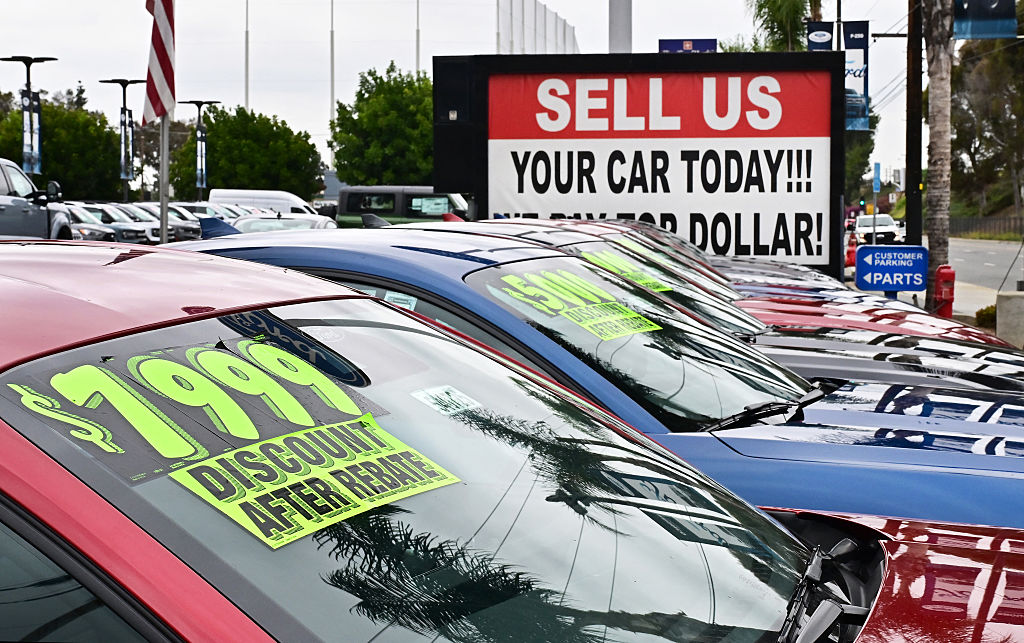
Across the US, people are increasingly defaulting on their car loans — a dire economic indicator because these loans are usually the last payment Americans are willing to miss. Meanwhile, auto insurers are raking in record profits after hiking rates.
No, don’t look at all those obvious signs that the economy is going down the crapper. Just look at that squiggly line that is definitely not being propped up by the false circular investments in the AI bubble.
I have an idea how they can make cars cheaper. How about make them smaller and remove the spying equipment
Without the spying would make them cost more. The spying is what they consider a feature to keep pricing down a little since they will make money off of that. They will pass a little of that savings onto the consumer.
You think they actually pass those post-sale earnings on to the customer as savings? Why would they, when they could have their cake and eat it too? The average price for a new vehicle topped $50k recently, so they’re clearly not worried about keeping prices down.
Post purchase monetisation go brr
I’d gladly pay more, if only that feature were offered
But no one will buy them. Men need penis trucks, Karens need 6000lb SUVs to carry a 12lb baby.
Weeeeee 🎢
Not enough people do the math, whether moving and changing job into a neighborhood where the commute and daily errands would allow living car free would make you end up cheaper (it’s more than a loan and insurance, most cars want gas to move). Yeah… rent might be higher but it’s math worth doing and it will reveal how much work hours you spend just for keep your car moving.
The average US household spends 17% of its budget on transportation. Obviously other forms of transport also cost money, but it still nearly possible to have a four day work week, if you get rid of your car.

Fascinating. I spend about 2% here in Germany, for two good bikes (which I bought used) including professional maintenance, plus a monthly commuter rail pass. No car. Roughly a four-day week.
It is not by chance that the 2008 financial crisis was unleashed by the bankcruptcy of an investment bank which was trading with shaky housing loans, leading to an investment bubble, which in turn was pinched just after prices for oil had passed 140 dollar per barrel. Which lead people to reconsider the rationale that you would live cheaper if you resign to living far away from work with super long commutes. It was the pheripherical suburbs far away from cities where that calculation broke down first, and houses became unmarketeable first.
That situation was then somewhat stabilized with quantitative easing and super cheap credit money, which also made energy extraction, and thus oil prices cheaper. Which essentielly means collectively borrowing money we can’t pay back, to finance energy and a way of living we can’t really afford. And states are still pumping more money into that.
I feel like places to work are not usually by places to live, and that’s an awful lot of commitment to a job that may not last.
I guess it depends on your inventory me level.
Meanwhile, auto insurers are raking in record profits after hiking rates.
Floods and Teslas. Those turds don’t float, and they are written off for minor crashes.
I have a neighbor who’s afraid to turn her gas furnace on because she’s been shut off mid-winter for high bills she can’t pay.
Another friend had her electric shut off this week and is struggling to find resources.
It’s not just cars, everyone making under $60k or $100k for couples is in dire straits right now. Even people making low 6-figures are living paycheck to paycheck. It’s insane to watch it all build up.
These are the real consequences of greed running rampant. People need cars to get to work, this has a severe impact on economic activity. I’m almost certain we have been in a recession since the beginning of October.
I would too if I decided I was grossly overcharged for a soon to be rusting behemoth.