I love how which devices get countertop space is a real reflection on culture around the world.
Here in the UK you can always find an electric kettle, without question. In Italy a Moka pot. In Japan a rice cooker.
It says a lot about what’s important to people.
It’s only really in the US that you see such a proliferation of hyper-specific gadgets. Smoothie maker, waffle maker, electric egg poacher, vegetable spiralizer…
I don’t know if that says anything about American culture, or just that you guys have really big kitchens.
In the era before cheap microwave ovens the electric egg steamer was my go-to dorm appliance!. I found a coffee can would fit in place of the cover. Then it could not only cook eggs, it could reheat Chef Boyardee and Dinty Moore stew cans.
Here (UK) a friend has wasted over a grand on some AI food prep nonsense thing.
In our culture this is understood to be a sign of deep seated emotional distress. And in accordance with our culture we ignore their distress and bring up the weather, as is tradition.
Huh, I’m surprised that other countries aren’t big on kitchen gadgets. I’m American and I try to avoid any of those specialty gadgets. I’ve received several as gifts over the years, though I always end up selling or donating them
We often do have really big kitchens, but it’s more about us being sold the idea of having whatever we want, whenever we want it, and there’s a gadget for that.
Although, I will say, in most American kitchens I’ve seen have, at least, a toaster oven. Possibly an air fryer. Those both are pretty common here.
IRL clutter is mental clutter which is why I have banned all counter appliances from our home. All such appliances are stored until they are needed and then put away, a practice which trades occasional 30s periods of effort for a lifetime of mental clarity.


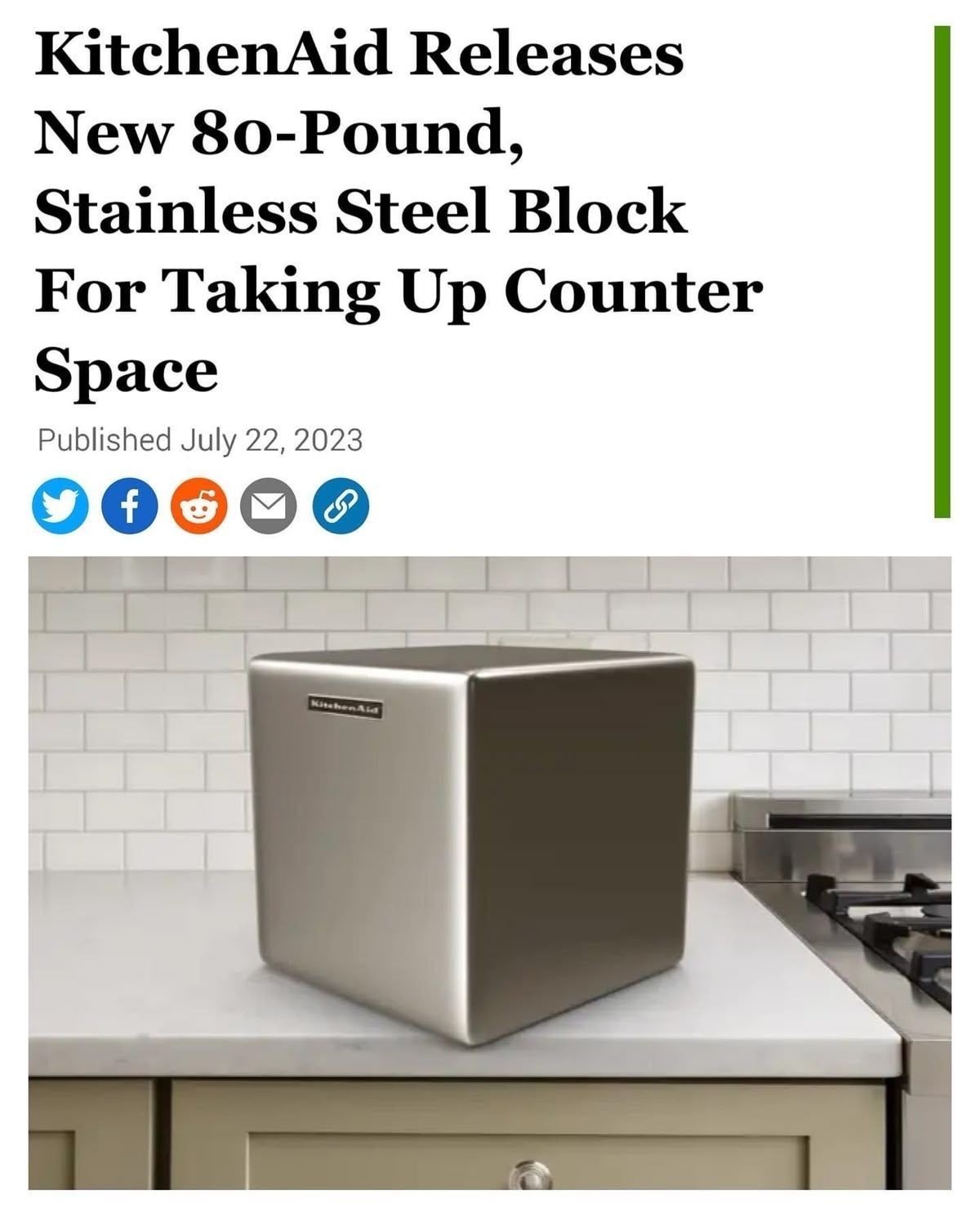
I love how which devices get countertop space is a real reflection on culture around the world.
Here in the UK you can always find an electric kettle, without question. In Italy a Moka pot. In Japan a rice cooker.
It says a lot about what’s important to people.
It’s only really in the US that you see such a proliferation of hyper-specific gadgets. Smoothie maker, waffle maker, electric egg poacher, vegetable spiralizer…
I don’t know if that says anything about American culture, or just that you guys have really big kitchens.
I’ve never seen any of those with permanent counter space in any American kitchen. I’ve never even heard of an electric egg poacher.
I chose intentionally obscure and wacky gadgets to overstate the point. I don’t genuinely think everyone has these :)
In the era before cheap microwave ovens the electric egg steamer was my go-to dorm appliance!. I found a coffee can would fit in place of the cover. Then it could not only cook eggs, it could reheat Chef Boyardee and Dinty Moore stew cans.
Isn’t a “smoothie maker” just a blender? I dunno if I would consider it one-use. More uses than a rice cooker or electric kettle
Here (UK) a friend has wasted over a grand on some AI food prep nonsense thing.
In our culture this is understood to be a sign of deep seated emotional distress. And in accordance with our culture we ignore their distress and bring up the weather, as is tradition.
Huh, I’m surprised that other countries aren’t big on kitchen gadgets. I’m American and I try to avoid any of those specialty gadgets. I’ve received several as gifts over the years, though I always end up selling or donating them
We often do have really big kitchens, but it’s more about us being sold the idea of having whatever we want, whenever we want it, and there’s a gadget for that.
Although, I will say, in most American kitchens I’ve seen have, at least, a toaster oven. Possibly an air fryer. Those both are pretty common here.
Our KitchenAid air fryer gets a permanent spot because it also functions as a toaster/toaster oven, proofer, dehydrator, and food/plate warmer.
IRL clutter is mental clutter which is why I have banned all counter appliances from our home. All such appliances are stored until they are needed and then put away, a practice which trades occasional 30s periods of effort for a lifetime of mental clarity.