I wonder is a scaled up version of this could work for grid-scale medium length storage. Smoothing out weeks of dunkleflaute is the main blocker to going to a primarily renewable grid. Gasoline is a lot easier to store than hydrogen and large scale gasoline generators should get close to the efficiency of natural gas peaker plants.
Sure, but you cant store that electricity as electricity. IMO this is most interesting as a energy storage technology, so the comparison isnt what that gasoline would do in an ICE car compared to an EV, its to what it would cost compared to battery storage (or compressed air or whatever other technology) to store a few weeks of output on the order of months. The big advantage I see here is that unlike those other technologies capacity is dirt cheap to build, its just a metal tank. So whenever a renewable plant would curtail its output it can instead redirect to creating gasoline to burn when the renewables arent producing much electricity.
At least taking their figures at face value, about 75kwh to generate a gallon of gas, and let’s say 67 kwh to get a an EV 200 miles (assuming some losses between the generation and the actual battery capacity, and 3 miles/kwh which is on the low-ish end of EVs, but realistically close). The most aggressive hybrids getting 50 mpg so we end up with it being about 4x worse than charging an EV with that energy source.
At least at residential rates where I live, that’s about $10, so it would only really make sense when gas gets to $10/gallon, otherwise, go to the pump for the fossil fuel. That’s ignoring the cost of the station itself.
So maybe nearer than one might imagine, but still highly impractical. Maybe if they doubled the efficiency and gas eeks up without residential electricity rates going up…
But all this is assuming it will work exactly as well as they say it is, and I’ve learned to have a healthy dose of skepticism… Here though I can be as optimistic as they like and it’s still a tough sell…


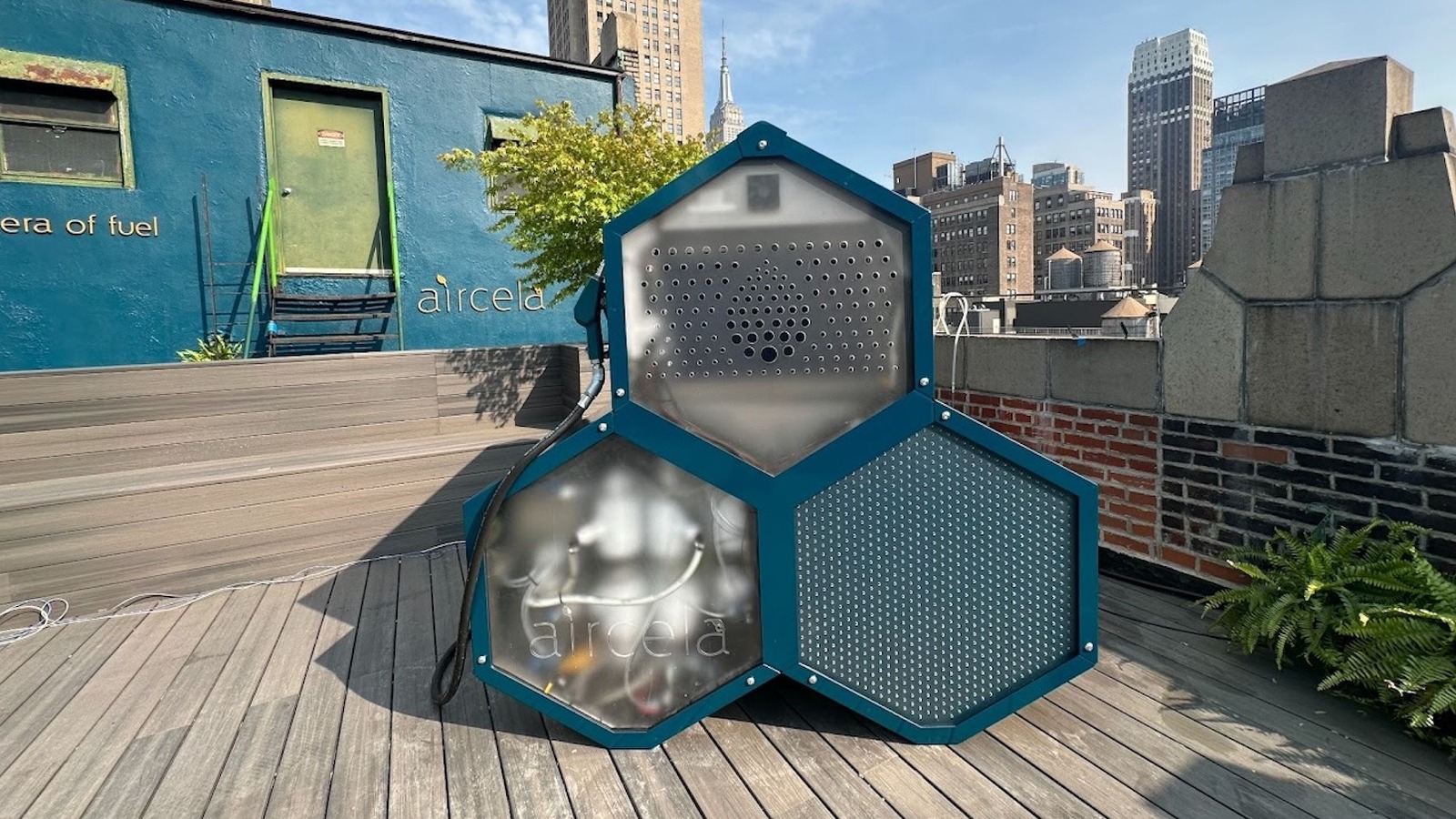
I wonder is a scaled up version of this could work for grid-scale medium length storage. Smoothing out weeks of dunkleflaute is the main blocker to going to a primarily renewable grid. Gasoline is a lot easier to store than hydrogen and large scale gasoline generators should get close to the efficiency of natural gas peaker plants.
Problem is that the efficiency is on the ground here.
The same energy that might get an EV 200 miles instead produces a single gallon of gasoline, to get a sense for the relative value of the efficiency.
Sure, but you cant store that electricity as electricity. IMO this is most interesting as a energy storage technology, so the comparison isnt what that gasoline would do in an ICE car compared to an EV, its to what it would cost compared to battery storage (or compressed air or whatever other technology) to store a few weeks of output on the order of months. The big advantage I see here is that unlike those other technologies capacity is dirt cheap to build, its just a metal tank. So whenever a renewable plant would curtail its output it can instead redirect to creating gasoline to burn when the renewables arent producing much electricity.
Honestly, I would have expected worse than that
At least taking their figures at face value, about 75kwh to generate a gallon of gas, and let’s say 67 kwh to get a an EV 200 miles (assuming some losses between the generation and the actual battery capacity, and 3 miles/kwh which is on the low-ish end of EVs, but realistically close). The most aggressive hybrids getting 50 mpg so we end up with it being about 4x worse than charging an EV with that energy source.
At least at residential rates where I live, that’s about $10, so it would only really make sense when gas gets to $10/gallon, otherwise, go to the pump for the fossil fuel. That’s ignoring the cost of the station itself.
So maybe nearer than one might imagine, but still highly impractical. Maybe if they doubled the efficiency and gas eeks up without residential electricity rates going up…
But all this is assuming it will work exactly as well as they say it is, and I’ve learned to have a healthy dose of skepticism… Here though I can be as optimistic as they like and it’s still a tough sell…