

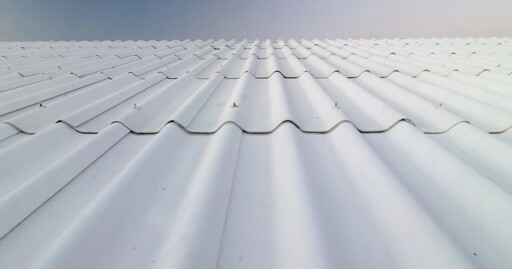
Researchers at the University of Sydney and commercial start-up Dewpoint Innovations have created a nano-engineered polymer coating that not only reflects up to 97% of the sun’s rays, but also passively collects water. In tests, it was able to keep indoors up to 6 °C (~11 °F) cooler than the air outside.
That temperature differential results in water vapor condensing on the surface – like the fogging on a cold mirror – producing a steady trickle of droplets.
In trials on the roof of the Sydney Nanoscience Hub, the coating captured dew more than 30% of the year, generating as much as 390 mL of water per square meter (roughly 13 fluid ounces per 10.8 square feet) daily. This might not sound like a lot, but a 12-sq-m (about 129-sq-ft) section of treated roof could produce around 4.7 L (around 1.25 US gallons) of water per day under optimal conditions.
Most houses have a lot more roof than that. “Over an average residential roof,” reads the Dewpoint website, “you can expect enough water per day to cover your basic water needs.” That’s in addition, mind you, to the rainwater you’d be collecting as well, since you do need to have a typical rainwater collection system installed to capture the dew. In Sydney for example, assuming an average annual rainfall around 1 m (3.3 ft), The Tank Factory tells us we could expect to collect somewhere around 6 times more rainwater than condensation - but that equation would certainly look very different in drier areas.
390 mL
Thats actually quite substantial considering how big a roof can be, but it will be interesting to see how this scales up.
that equation would certainly look very different in drier areas.
I think this would only really be relevant in drier areas. Areas where you can just to catchment don’t need to worry about this.
This is very interesting in that it also collects water. I have been following a scientist’s series as he has been researching infrared cooling paint that has gotten similar, if not better results in terms of cooling: https://youtu.be/KDRnEm-B3AI, along with hydrophobic coatings for other purposes.
It is a great idea to combine those two things and look into how much water a fully painted roof can provide though, so I’ll look into passing this paper along to him.
Developed at University in Sydney where new housing developers are obsessed with black roofs.
$15,000 cheaper to use tiles mass produced for housing estates, compared to the same tiles in a lighter shade.

